Curriculum
The Humans and Microbes core curriculum is a central component of the structured training concept within the Research Training Group. As a collaborative research network of multiple research groups, the RTG provides an interdisciplinary and highly interactive environment for doctoral training.
Complementing the individual research projects carried out in different laboratories, the core curriculum ensures a coherent and high-quality qualification framework across the entire consortium. It is designed to support early career researchers in developing scientific excellence, transferable skills, and the international competitiveness required for successful research careers.
Doctoral researchers are embedded in their respective research groups and regularly participate in lab meetings and seminars. These interactions foster close supervision, continuous scientific exchange, and the development of in-depth expertise within their specific field of research.
At the same time, the structured core curriculum connects all doctoral researchers across the RTG. It promotes interdisciplinary exchange, broadens scientific perspectives, and complements individual project work with joint training activities. The mandatory curriculum comprises the following key elements:
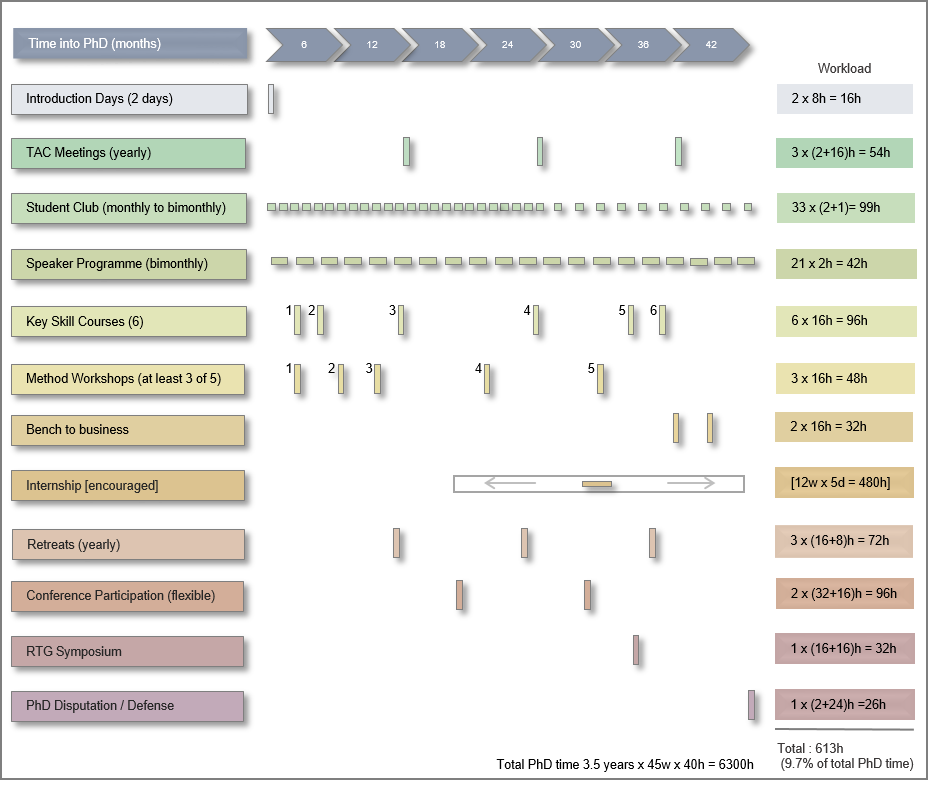
The total work load is composed of meeting/ workshop time (1stnumber in brackets) and preparation time (2ndnumber in brackets).
TAC: Thesis Advisory Committee, h: hours , w: weeks
Introductory Week
Program overview, research group presentations, and guided campus tours to facilitate orientation and early networking.
Key Skills Courses
Training in e.g. Good Scientific Practice, data analysis, scientific writing, presentation skills, and grant applications.
Lunch Clubs
Monthly, informal, peer-organized meetings fostering exchange and community within the RTG.
Guest Speaker Program
Bi-monthly talks by leading scientists, including exclusive small-group discussions with doctoral researchers.
Method Workshops
Hands-on courses in advanced techniques such as mass spectrometry, AlphaFold, super resolution microscopy and cryo EM.
Research Internships
Optional stays of up to three months, preferably abroad, to expand scientific and professional networks.
Bench to Business
Insights into non-academic careers through interactions with entrepreneurs and legal experts.
Conferences & Retreats
Active participation in scientific conferences, organization of the Humans and Microbes Symposium, and annual retreats with principal investigators.